The stringed shriek: Yuko Cornale and Sofía Escamilla

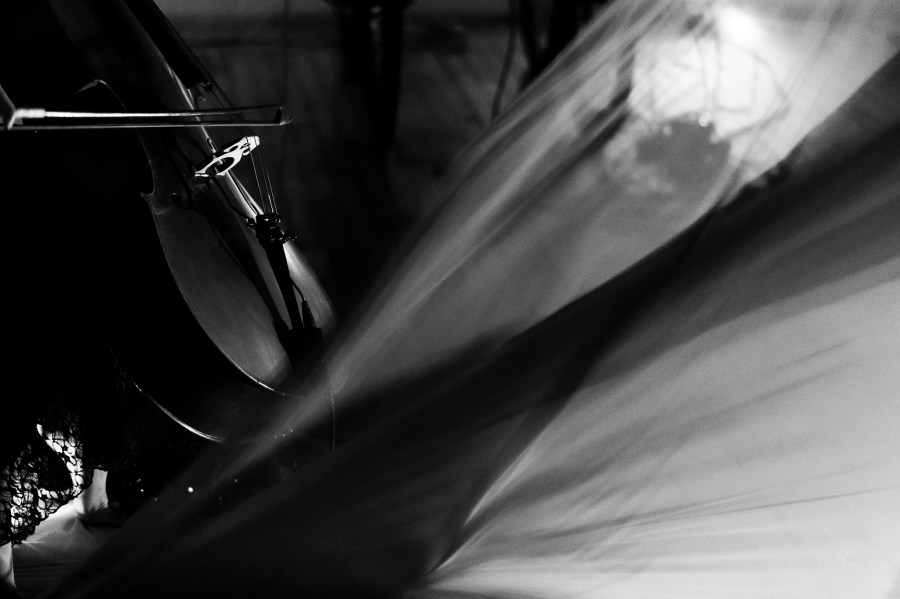
A stricking part of a cello is it’s spike, feels very much like a weapon for us who see it, to the player feels more like a steady footing, to a classical player that is, to Sofía it’s rather like a boat’s anchor, holding her flight, but I guess its both the function and the pricey burden of loving big bodied instruments. You see, Sofía was meant to be a repertoire interpreter, but things went other way, as she furthered into her trainning she felt more and more constrained, like if in learning to fly the instructions led to the painful lesson that you can only soar in certain ways and for strict, non-negotiable purposes. No bird flies like that. No musician should place pleasure at the bottom of priorities, and pleasure for Sofía often means going beyond herself, beyond her known world, discovering the limits of her feelings, thoughts and emotions, both private and musical, and by going far thus trying to blurr the distance between art and self. So she is willing and ready to jump at the unknown, which is exactly what Yuko needs as a partner.

Yuko’s mother raised her in her native tongue, italian, was brought up through her first childhood in Bolivia which made spanish her natural thinking language, through her teenage years she lived a bit in France, Italy, a bit here and there until she finally stablished in México. So where does she feel at home? Everywhere and nowhere, except when she’s with her cats, those curious animals that agree to live with humans without being domesticated. Yuko, as a vocal performer, understands that the human voice —that neverending mystery for which the ancient greeks gave a specific word—is the expression of a whole body, not just the vocal tract and the resounding bones but every fiber, mucose and gland, and then the body moves, and the singing voice, wether it howls or growls, clasps or opens in clear tones, moves too into uncharted territory.
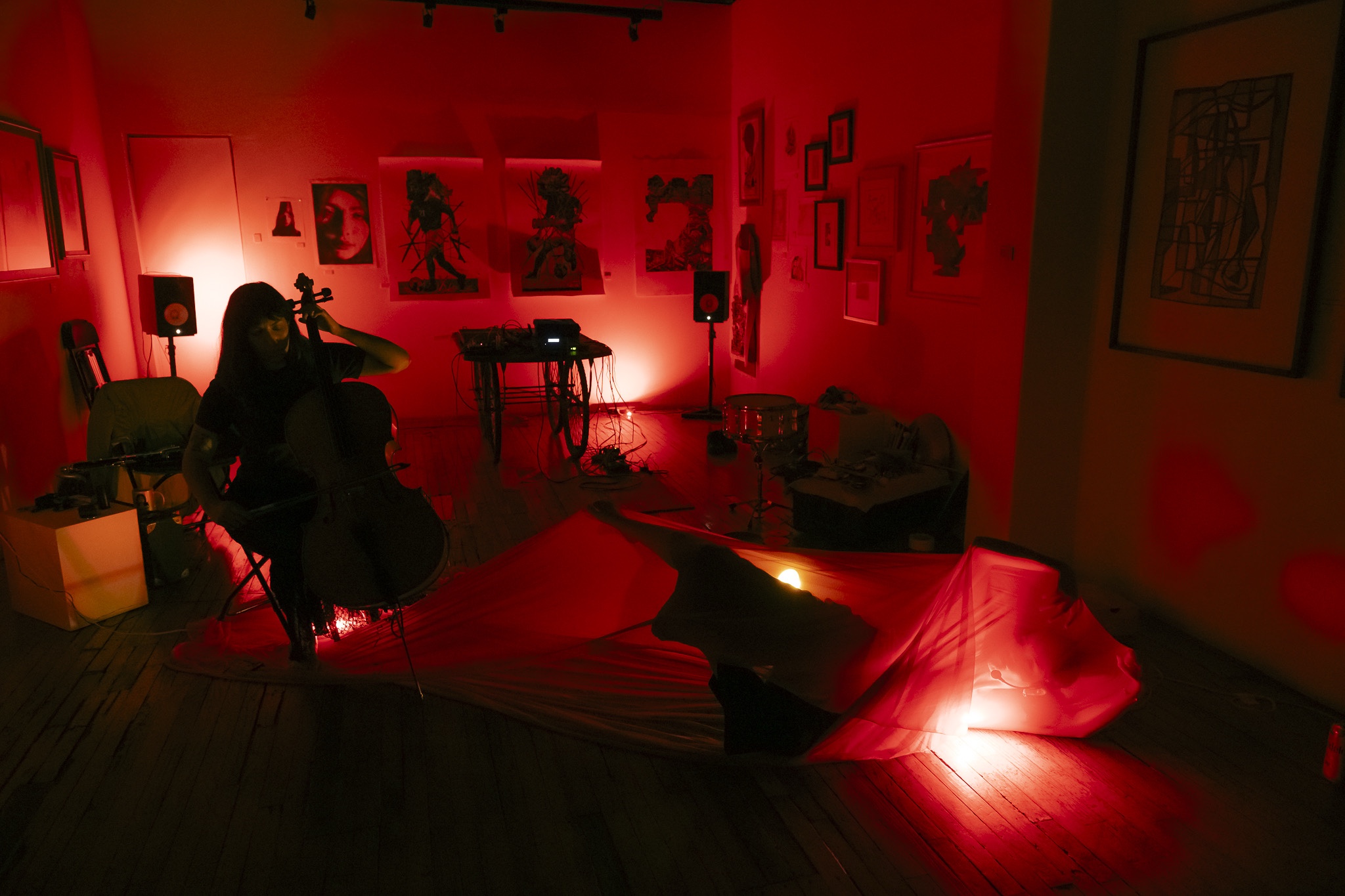
Photo courtesy of Rafael Arriaga

For Yuko and Sofía, making music involves their whole being and together they have created a string of tension, a material one, by means of a large fabric cloth, pinned down on one side by the cello’s tail spike and on the other wraping Yuko’s body, every sound gives birth to a movement, every pull at the fabric can summon even Sofía’s human voice, rasping as if her vocal chords were being stroked very close to the bridge, every loosening of fabric instability responds to a cackling or a long wailing from Yuko. They’ve told me that for them their performance has a feeling of giving birth, the fabric playing a placenta and umbilical chord of sorts, what for the rest of us takes place is the birthing of a chance and play of our own inner tensions, which need not be resolved but nurtured.

I do believe they do succeed in going beyond themselves, I think so not only because the work they create together relapses in a kind of trance that is unpredictable and unavoidable, but also because I recorded the performance and some month later sent it to them, and both Yuko and Sofía reacted exactly the same, by asking What’s this? Who’s playing?

Erick Vázquez
Comings and goings around a moving ground

The project of Cartografías pendulares is the recording of a free improvisation between Mitsuhisa Sakaguchi, Cal Lyall, Ernesto del Puerto and Yuko Cornale. Music, very well maybe like love, a universal language, but if so free improvisation is a rather peculiar kind of love, because it springs out of the exchange of individuals who didn’t necessarily know each other previously, and develops over the individual experiences of each artist only to underline those differences in an adventure with no clear departure station, nor planned destiny in sight.

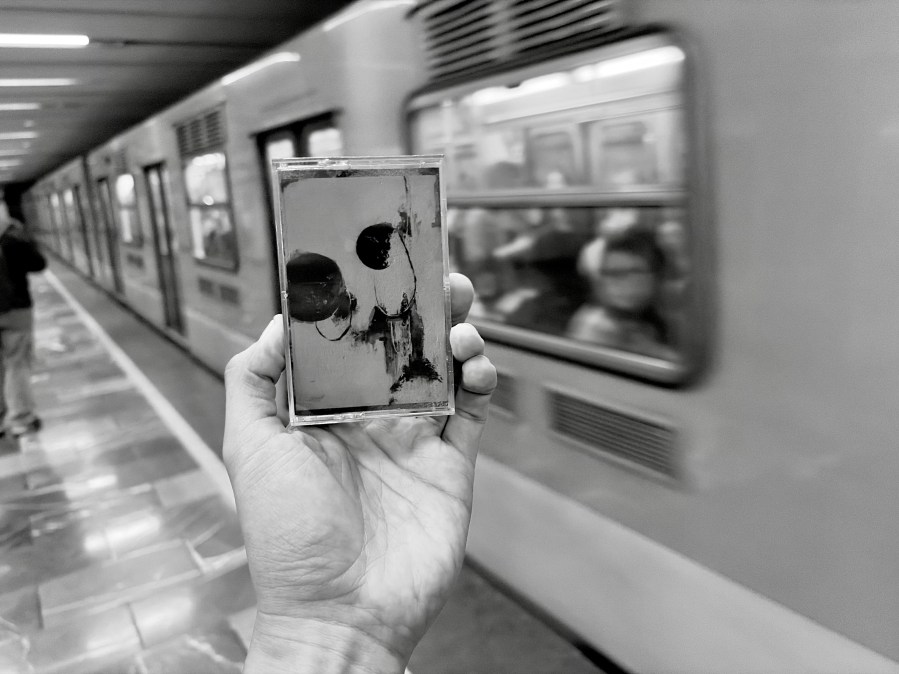
I listened to the recording on a subway trip at rush hour in Mexico City, a challenging task that requires some physical and mental gymnastics in order to keep one’s sanity. In the overcrowded trains, along the long, long distances, it is ony natural to get lost in thought (the near homophony between train and trance is more than a happy accident), and people use their ear phones to facilitate their trances, make their long way home more bearable, get away from the surrounding oppressive massive city of which making sense is not easy. But as I was listening to Cartografías pendulares I found that this music was a perfect companion to my underground experience crossing the city, made me more aware, led me to a quickening of my reality rather than escape it, and I wondered why. How was it that a recording conceived in Japan in colaboration with two mexicans made perfect sense in a situation so specific, on another far side of the globe?

Yes the music is rich, in textures and brilliances, often surprising, it lures our full attention, but it was more than that. As I was holding for dear life on my sticky pole the music became an adaptation tool. The subway line car I was traveling on was built in the 80s, it’s design talked back then of a future where progress was waiting for us, and Paul Verhoeven, in adapting Total Recall, saw that it was the perfect set to bring to life Philip K Dick’s vision of a dystopian reality where destiny had already reached us, and left us behind. I still had to change to trains, and then experienced a glitch, sudenly I was somewhere ahead with no record of a chunk of time and space. What is a glitch? Its the opposite of a Dejá vu, its a leap in time, and the music was just the perfect link along the glitch, leaving nothing out of place. Science fiction is the fitting narrative for our times, its so adecuated to the signs of our political and technocratic reality that some of it’s most famous stories are already fulfilled prophecys. There is something in the music of Cartografías pendulares that is akin to science fiction, which is massively consumed in both Tokyo and Mexico City, because it speaks to us of what maybe already happening, and I think it’s because both cities are building a vertiginous future over ancient temples, converging very old signs with radical new ones that are taking over the whole world. Cartografías pendulares is, in its adventure, properly speaking, music of our time, which is a time no longer comprehensible in linear terms, and that must be why each track of the album was named after scenes of John Carpenter’s The Thing, a story of bodies mutating into a new kind of species, just at the edge of the known world.

The very particular history of noise in Japan developped a branch of free improvisation, known as Onkyokei, which I think plays an important part in the sound Yuko, Cal, Mitsuhisa and Ernesto found together. Onkyokei (roughly translated as both “sound” and “echo”) is a kind of minimalistic, maybe even oniric dimension of electronic music to which John Cage felt strongly attracted to. Cage, madly inlove with silence as the source and playfuly never reaching goal of sound, thought Zen could be found at the heart of it all. The album’s music, as I already mentioned, is rich in its language, and besides the disrupting experience of time and space belonging to a large both ancient and modern metropolis, there is another neighboring experience between japanese and mexican culture, a deep sense of spirituality, of inner search. For one of their concerts in Mexico City, the musicians decided to play in an open venue, in a wide public park. Arriving a few minutes late I was guided through the park by the music, a very tranquil, zoom like tide of low, long booming sax, crakling sustained voice, pin pointed electric guitar puntings and rasping intermitent synthesizer. As I approached the music was also looking around the sunday activities of families, children playing, dogs and a picnic here and there. Surrounding the group at the stage, playing what to unaccustomed ears could be rather strange and chaotically ammased sounds, there was a couple with their little kids playing in the grass, someone walking her dog, a young man was exercising, jumping the rope with his earphones attached. The young man, suddenly aware something else was going on, removed his earphones and simply resumed jumping the rope. Nothing in the course of a regular sunday in the park was disturbed by their music, merged with the everyday life. It was all perfectly natural.   

 Erick Vázquez

Cartografías pendulares, free improvisation byMitsuhisa Sakaguchi (synthesizer and intervened piano), Cal Lyall (electric guitar), Ernesto del Puerto (saxophone) and Yuko Cornale (voice), was recorded in Japan on 2025 by Nobuki Nishiyama, mixed by Yuko Cornale and mastered by Diego “Ninja” Juárez. Art cover by Gustavo Abascal and designed by Sara Norman and Cal Lyell, under the labels Venas Rotas Discos and Subvalent records.